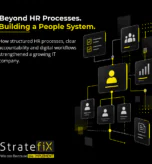
How HR Transformation Built a Scalable People System for a Growing Limited Company in IT
A 9-month HR transformation to strengthen organisation structure, HR processes, performance management and digital HR.
When Business Growth Outpaces the Systems Behind It
Growth changes a company.
Teams become larger. Roles become more specialised. Decisions become more frequent. Hiring becomes more complex. And what once worked through informal communication and individual ownership starts creating bottlenecks.
That was the situation for a growing Limited company in the IT software development sector.
The business had grown, but its HR function had not evolved at the same pace. Responsibilities within HR were overlapping, important decisions were concentrated among a few individuals, several processes were undocumented or inconsistently followed, and the HRMS already owned by the company was not being effectively used.
The problem was therefore bigger than simply “improving HR.”
The business needed an HR function that could support growth without becoming dependent on individuals.
That became the focus of a nine-month transformation engagement with Stratefix.
The Starting Point: What Was Really Holding HR Back?
Stratefix began with an AS-IS study to understand how HR was actually functioning, not just what existing policies and documents said should be happening.
The assessment identified nine HR red indicators through the A.I.N.A Report 2025.
The findings revealed several interconnected problems.
HR ownership was unclear
The HR team had overlapping responsibilities across recruitment, onboarding, payroll support, compliance and employee relations. A significant amount of work and decision-making depended on a few individuals.
This created bottlenecks and made it difficult to establish clear accountability.
Recruitment lacked structure
The organisation had more than 7,000 CVs sitting unfiltered, while recruitment lacked a structured applicant tracking and evaluation process.
The issue wasn’t simply the volume of CVs. It was the absence of a system for moving candidates through a consistent recruitment workflow.
Performance management was not operating as a system
KRAs and KPIs had been defined, but there was no effective review calendar. Reviews were often delayed, and performance data was being maintained manually.
This made it difficult to create a consistent performance rhythm across the organisation.
Technology existed, but adoption was missing
The company already had Keka HRMS, but it wasn’t embedded into daily HR operations.
This highlighted an important underlying issue:
The challenge wasn’t the absence of technology. It was the absence of the operating system around it.
People development was reactive
There was no structured annual training and development plan, while succession planning and future leadership readiness had not been systematically established.
The Stratefix Approach: Diagnose. Design. Implement.
The engagement followed a simple but important principle:
Don’t prescribe before understanding how the business actually works.
The project moved through three stages:
01. Diagnose
Stratefix studied the existing HR structure, reporting relationships, processes, documentation, systems and decision-making patterns.
The A.I.N.A assessment helped identify the critical HR red indicators that required attention.
02. Design
The findings were translated into practical systems:
- Organisation structure
- RACI and ownership framework
- HR SOPs
- HR policies
- KRAs and KPIs
- Performance review mechanism
- Manpower planning
- Training and development framework
- Digital HR workflows
03. Implement
The engagement did not stop with recommendations.
The designed systems were put into practice through Keka, ClickUp, review cycles, awareness activities, training and day-to-day HR execution.
This was the critical difference between designing an HR framework and building an HR function that could actually operate through it.
From Individual Dependency to Clear Ownership
One of the first priorities was reducing dependence on individuals.
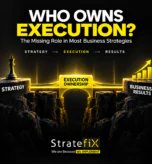
Stratefix created a RACI framework for the HR department, defining who was Responsible, Accountable, Consulted and Informed for different activities.
This helped address the overlap between HR team members and reduced the tendency for decisions and activities to keep returning to the same individuals.
The shift was simple:
Before:
“Who is handling this?”
After:
“Who owns this?”
That distinction is critical as an organisation grows.
Turning Informal HR Practices into Operating Systems
The next step was to convert fragmented HR practices into documented, repeatable processes.
Stratefix developed and implemented 16 HR SOPs, covering key stages of the employee lifecycle, including:
- Recruitment and joining
- Induction and onboarding
- Training and development
- Performance improvement
- PMS and appraisal
- Payroll and compliance
- Promotion
- Grievance handling
- Exit
- Manpower planning
- Leave and attendance
- HRMS usage
- Asset allocation
These processes were supported by the forms, letters and checklists required for execution.
Alongside the SOPs, 13 HR policies were developed and put into practice, covering areas such as grievance handling, code of conduct, POSH, leave, attendance, increments, PIP, probation, asset management, exit and training.
The objective was not to create a larger HR manual.
It was to make HR less dependent on memory, individuals and informal communication.
Building Performance Accountability
A growing organisation needs employees to understand not only what their roles are, but also what successful performance looks like.
Stratefix introduced role-wise KRAs and KPIs, supported by a structured performance review cycle.
Keka was configured for performance management, while ClickUp was used to track tasks and identify performance gaps requiring attention.
This created a clearer connection between:
Role → Responsibility → KPI → Review → Improvement
Instead of performance being an occasional HR exercise, it became part of an ongoing management rhythm.
Making HR Technology Work for the Business
The company already owned Keka.
The transformation was about making it useful.
Keka was brought into key workflows covering:
ATS → PMS → Payroll → Meeting Mechanism
ClickUp was also incorporated into task management and follow-up.
This illustrates an important lesson from the engagement:
Buying an HR technology platform does not create digital HR. Adoption, process design and ownership do.
The case study documentation specifically identifies the need to establish roles, SOPs and policies before the HRMS could become effective in daily work.
Preparing the Organisation for the Next Stage of Growth
The transformation also moved beyond immediate HR processes.
Stratefix developed a standard organisation structure, grade structure, vacancy reporting and manpower forecasting to provide greater clarity around roles and future people requirements.
A yearly training and development calendar was also created and implemented, replacing a largely reactive approach to employee development.
At the organisational level, the company’s vision and mission were redesigned, values were defined and launched, and activities were conducted to bring those values into the organisation.
The objective was to ensure that HR wasn’t operating separately from the business.
It was becoming part of the infrastructure through which the business could grow.
The Transformation at a Glance
| Before Stratefix | After Implementation |
| HR responsibilities overlapped | Clear ownership through RACI |
| Decisions depended on a few individuals | Defined decision and approval model |
| Processes were informal or undocumented | 16 SOPs implemented |
| Policies were not consistently followed | 13 policies put into practice |
| 7,000+ CVs remained unfiltered | Structured ATS workflow introduced |
| Performance tracking was manual | KRAs, KPIs and PMS implemented |
| Training was reactive | Annual training calendar implemented |
| Organisation structure was not formally defined | Standard structure and grades established |
| HRMS was underutilised | Keka integrated into key HR workflows |
| Limited HR visibility | Structured HR data and tracking |
The transformation therefore wasn’t about adding more HR activities.
It was about creating a system in which HR activities could be consistently executed.
Measurable Impact
The project produced several tangible outcomes over the nine-month engagement.
25% HR Manpower Optimisation
The HR team moved from four positions to three, enabled by clearer roles, documented processes, workflow management and better use of HR technology.
16 SOPs Implemented
Critical HR processes were documented and moved into operational use.
13 HR Policies Implemented
Policies were not only drafted but supported through awareness and implementation activities.
9 HR Red Indicators Identified
The A.I.N.A Report helped identify the critical HR risks requiring intervention.
7,000+ CVs
The recruitment backlog highlighted the need for structured hiring workflows and ATS adoption.
100% Client Satisfaction
At the close of the project, the client reported full satisfaction with the engagement.
What Changed Beyond the Numbers?
The strongest outcome wasn’t any individual SOP, policy or software configuration.
It was the shift in how HR operated.
From person-dependent → process-driven
From unclear ownership → defined accountability
From manual tracking → digital workflows
From reactive training → planned development
From informal performance management → KRAs, KPIs and structured reviews
From an HR function supporting the business → an HR system designed to support scale
The client team also took ownership of the change. Training sessions were conducted, implementation responsibilities were established, and a Senior HR Executive was recognised with an “Implementation of the Month” certificate.
The Leadership Takeaway
A company’s HR function can work reasonably well while the business is small.
The real test comes when the organisation starts scaling.
At that point, informal systems become difficult to manage. Individual dependency creates bottlenecks. Technology without adoption adds little value. And performance becomes harder to manage without clear roles and measurable expectations.
This engagement demonstrated that HR transformation doesn’t have to begin with a new software platform or a larger HR team.
It can begin with a much simpler question:
How should HR actually work if the business is going to grow?
Stratefix answered that question through diagnosis, system design and execution—building the structures, processes, technology workflows and performance mechanisms required to make HR more scalable.
And the result was not simply a better HR department.
It was a stronger organisational foundation for growth.
Client Perspective
“If we had brought in an HR consultant when we had fewer employees, the company would have developed much better by now.”
— Client feedback
Stratefix: From Diagnosis to Execution
For Stratefix, transformation doesn’t end with identifying what needs to change.
We help businesses understand the gap, build the right system and put it into practice.
Beyond Consulting. Into Execution.