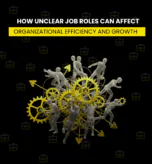
Organizations invest significant resources in hiring, training, and retaining employees. Leaders carefully select talent with the expectation that employees will contribute to organizational growth and performance. However, one of the most common and costly problems in organizations today is not lack of talent but lack of role clarity.
Role clarity means employees clearly understand their responsibilities, expectations, authority, and how their work contributes to organizational goals. Without this clarity, employees may work hard but fail to deliver meaningful results.
Research by Gallup shows that only 46% of employees strongly agree that they know what is expected of them at work (Source: Gallup, State of the American Workplace Report). This means more than half of employees operate without full clarity about their roles. Additionally, research by Effectory found that nearly 50% of employees experience role ambiguity, which negatively affects productivity, engagement, and performance (Source: Effectory HR Analytics Report).
This lack of clarity creates serious operational, financial, and organizational challenges that directly impact business success.
Productivity Declines When Employees Lack Role Clarity
One of the biggest consequences of unclear roles is reduced productivity. When employees do not know exactly what is expected of them, they spend valuable time seeking clarification, waiting for instructions, or second-guessing their decisions.
Instead of focusing on execution, they focus on understanding their responsibilities. This slows down workflow and reduces overall efficiency.
According to Effectory research, employees with clear roles are:
- 53% more efficient
- 27% more effective in their work
(Source: Effectory, Role Clarity and Performance Report)
Similarly, research published in the Journal of Applied Psychology found that role ambiguity significantly reduces employee performance and productivity because employees lack direction and confidence in their actions.
When productivity declines across teams, it directly affects organizational output, timelines, and profitability.
Duplicate Work and Operational Inefficiencies Increase
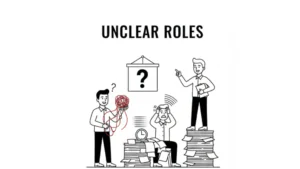
When roles are unclear, employees may unknowingly perform the same tasks, while other important responsibilities remain neglected. This duplication of effort wastes time, energy, and organizational resources.
According to the Harvard Business Review, unclear roles and responsibilities are one of the top causes of organizational inefficiency and execution delays (Source: Harvard Business Review, “The Overlooked Causes of Inefficiency”).
Organizations end up paying salaries without receiving proportional productivity. Over time, this significantly increases operational costs and reduces efficiency.
Clear role definition ensures optimal utilization of human resources.
Accountability Weakens and Ownership Declines
Accountability is essential for execution. However, accountability can only exist when roles and responsibilities are clearly defined.
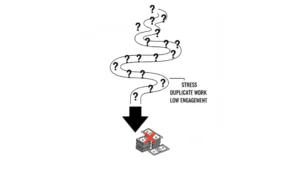
When employees do not know what they are responsible for, ownership becomes unclear. Tasks may remain incomplete because employees assume someone else is handling them.
According to McKinsey & Company, organizations with clearly defined roles and accountability structures are significantly more likely to achieve strong performance and operational efficiency (Source: McKinsey Organizational Health Index).
Without clarity, organizations experience:
- Delayed decision-making
- Poor execution
- Reduced responsibility
- Increased blame culture
Clarity creates ownership, which drives performance.
Employee Engagement and Motivation Decline
Employees are more engaged when they understand how their work contributes to organizational success. Role clarity gives employees purpose and direction.
However, unclear roles create confusion and disengagement.
According to Gallup, employees who clearly understand their roles are 2.7 times more likely to be engaged at work (Source: Gallup Workplace Research).
Additionally, Gallup reports that low employee engagement costs the global economy approximately $8.8 trillion annually in lost productivity, which represents 9% of global GDP (Source: Gallup State of Global Workplace Report, 2023).
Disengaged employees contribute less, show lower initiative, and negatively affect team performance.
Role Ambiguity Increases Stress and Employee Burnout
Unclear roles create constant mental pressure. Employees feel uncertain about whether they are meeting expectations or performing correctly.
Research published in the Journal of Organizational Behavior confirms that role ambiguity significantly increases employee stress, anxiety, and burnout (Source: Journal of Organizational Behavior, Role Stress and Burnout Study).
The American Institute of Stress reports that workplace stress costs businesses approximately $300 billion annually due to absenteeism, turnover, and reduced productivity (Source: American Institute of Stress).
Burnout reduces employee effectiveness and harms organizational performance.
Employee Turnover Increases and Talent Is Lost
When employees feel confused, stressed, and unsupported, they are more likely to leave the organization.
Research shows that role ambiguity is a major contributor to employee turnover intention (Source: International Journal of Human Resource Management).
Employee turnover creates significant financial losses. According to the Society for Human Resource Management (SHRM), replacing an employee can cost between 50% to 200% of their annual salary, depending on the role and experience level.
Additionally, LinkedIn Workplace Learning Report states that 94% of employees would stay longer in organizations that invest in their development and provide clear career direction (Source: LinkedIn Workplace Learning Report).
Clear roles improve employee retention and stability.
Organizational Growth and Profitability Are Directly Affected
All these issues ultimately affect business growth. When productivity declines, accountability weakens, and engagement drops, business performance suffers.
According to McKinsey, organizations with strong organizational clarity and alignment are 2.2 times more likely to outperform competitors financially (Source: McKinsey Organizational Health Index).
Role clarity ensures:
- Faster decision-making
- Better coordination
- Improved productivity
- Higher efficiency
- Stronger business performance
Organizations cannot scale effectively without role clarity.
Role Clarity Is Essential for Organizational Success
Role clarity provides structure, direction, and alignment. It ensures that employees understand their responsibilities and contribute effectively to organizational goals.
Organizations that invest in role clarity experience:
- Higher productivity
- Better employee engagement
- Lower employee turnover
- Stronger accountability
- Improved business performance
Clarity enables organizations to operate efficiently and grow sustainably.
How Stratefix Consulting Helps Organizations Build Role Clarity
At Stratefix Consulting, we help organizations create clarity, alignment, and structure within their teams. Through our structured organizational diagnosis and alignment frameworks, we help businesses clearly define roles, responsibilities, and accountability systems.
Our approach ensures employees understand their roles and work with clarity and confidence. This improves productivity, engagement, and organizational effectiveness.
When employees have clarity, they perform better. When teams are aligned, organizations grow faster.
Conclusion
Role clarity is not just an HR function- it is a critical business necessity. When employees do not understand their roles, productivity declines, engagement drops, accountability weakens, and turnover increases.
Research clearly shows that role clarity improves efficiency, engagement, retention, and overall business performance.
Organizations that invest in role clarity build stronger teams, improve performance, and achieve sustainable growth.
Clarity creates alignment. Alignment drives performance. Performance drives business success.